
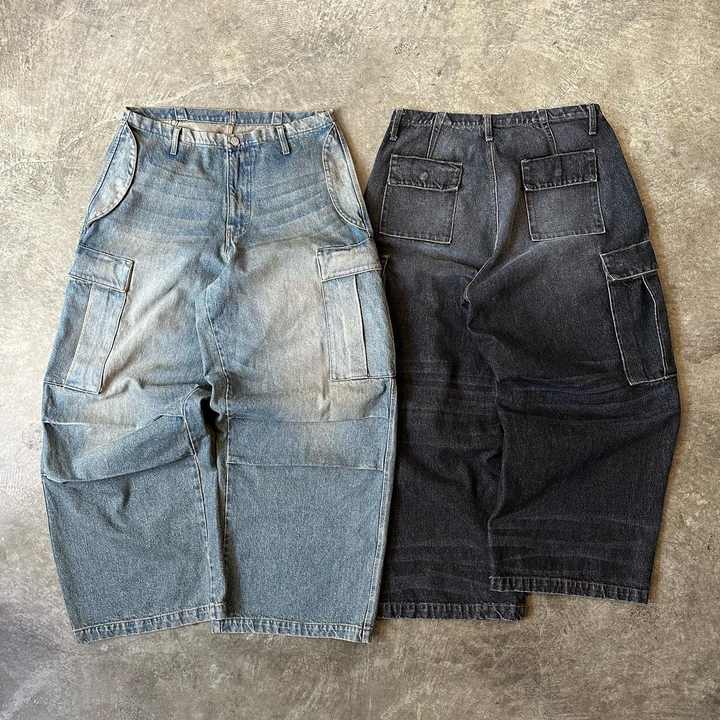
High waisted jeans offer a distinctive fit that combines a higher waistband with relaxed proportions, making them a practical choice for brands developing vintage-inspired and streetwear collections. However, choosing the right pair involves more than selecting a waist height. You also need to consider the leg shape, denim weight, wash effect, sizing, and customization options to match your target customers.
For clothing brands, retailers, and fashion startups, working with a manufacturer that supports custom designs can simplify product development. Yimai Garment offers custom designer men’s jeans with a baggy silhouette, oversized fit, acid-wash styling, and distressed details. You can also customize fabrics, colors, sizes, logos, and packaging to create denim products that reflect your brand identity.
What Makes High Waisted Jeans Different?
High waisted jeans sit higher on the waist than low-rise styles. Depending on the pattern and intended fit, they can create a defined waistline while leaving more room through the hips and legs.
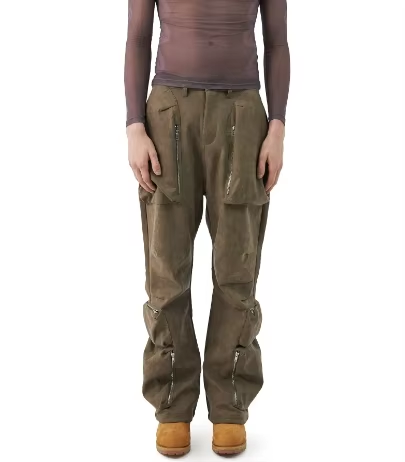
For men’s collections, high-rise denim works particularly well with relaxed streetwear, vintage-inspired outfits, and oversized tops.
Common styling features include:
- High-rise waist: Creates a higher waistband position for a distinctive silhouette.
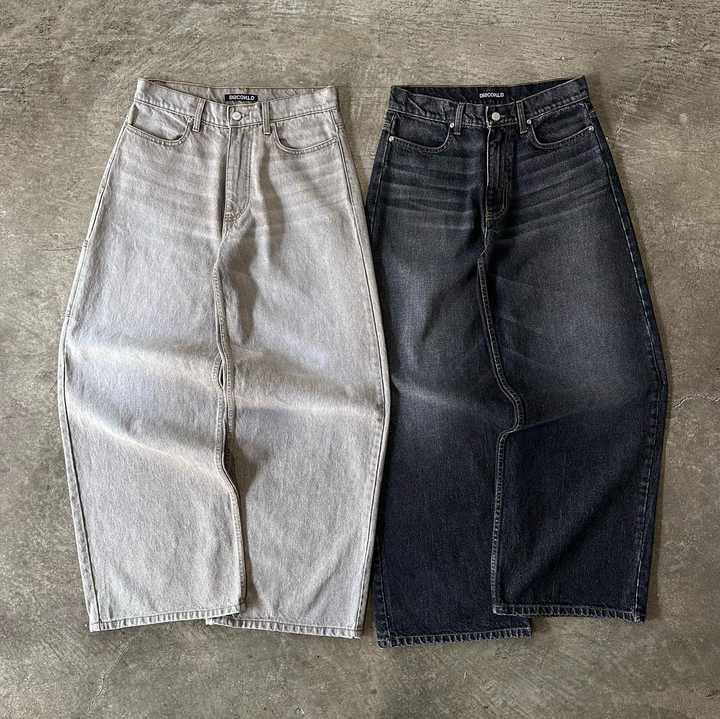
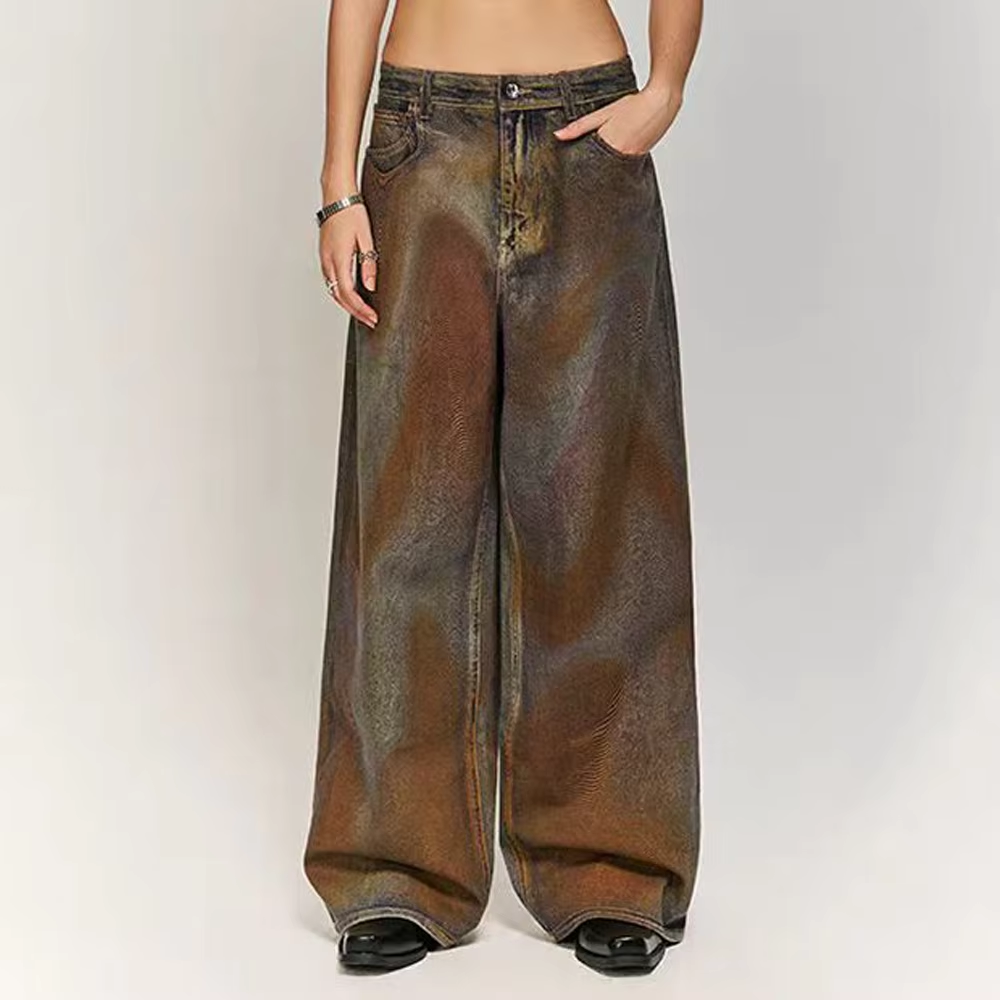
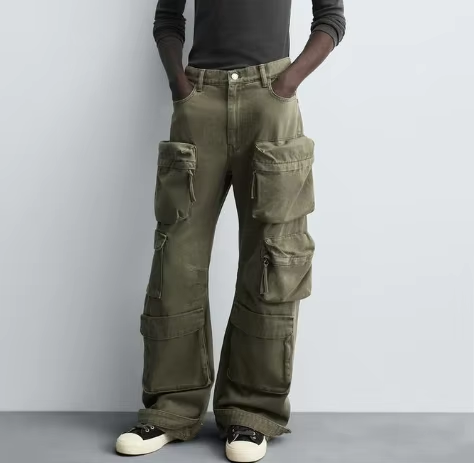
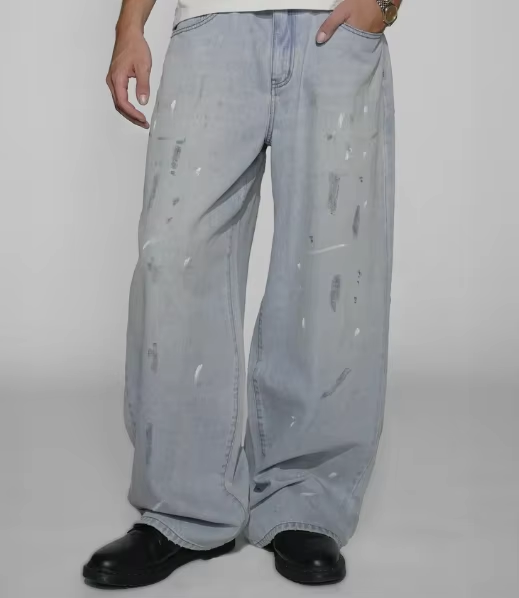
- Baggy legs: Provides extra room through the thighs and lower legs.
- Wide-leg construction: Creates a loose, flowing shape suitable for contemporary casualwear.
- Vintage washes: Acid-wash and faded finishes add visual texture.
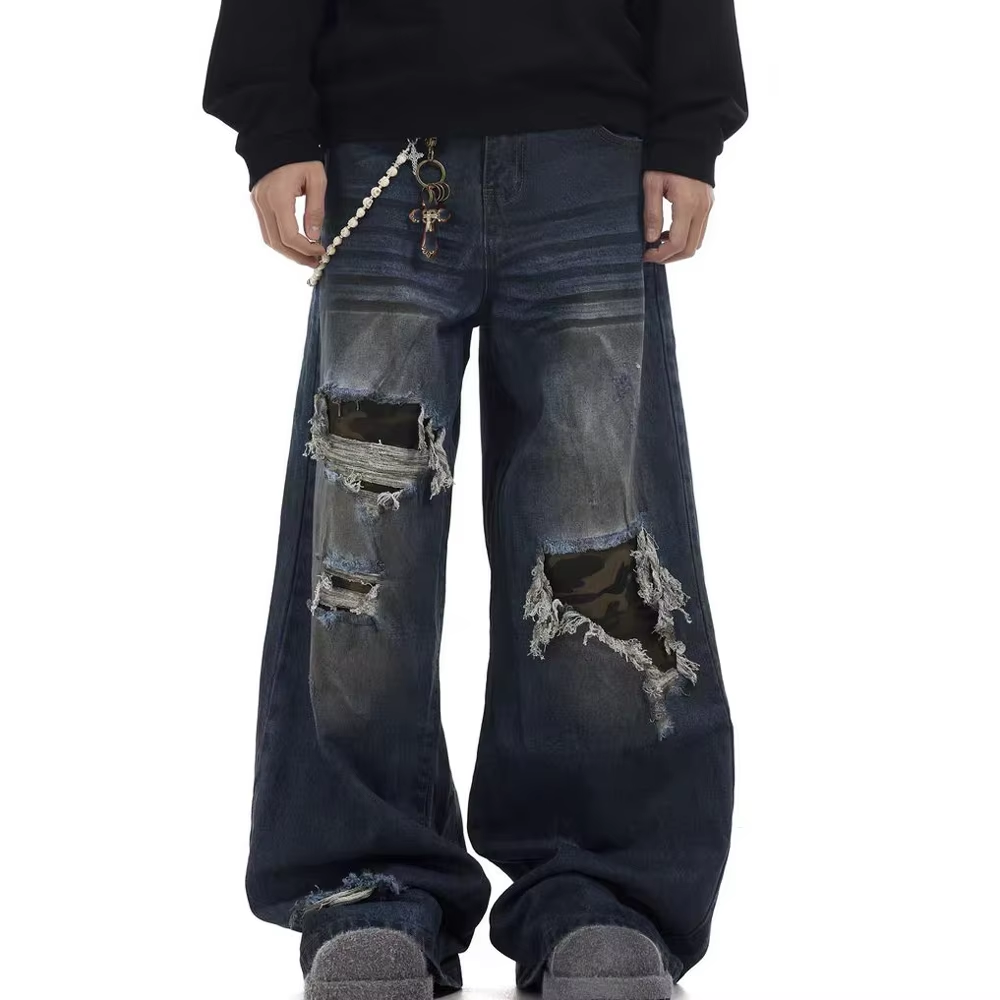
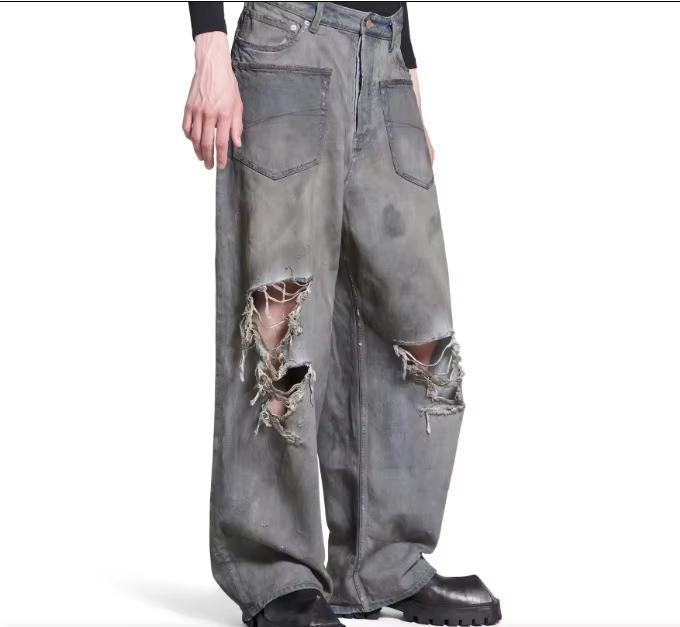
- Distressed details: Rips, abrasions, and other decorative treatments create a worn-in appearance.
These features make high waisted jeans for men worth considering when you want to develop a collection beyond conventional slim or straight-fit denim.
Custom Baggy High Waisted Jeans for Your Brand
Yimai Garment manufactures customizable clothing for businesses that need specific designs, fabrics, and branding details. Its custom designer men’s jeans combine a high-waisted profile with a loose, oversized fit and vintage-inspired styling.
Fabric Options and Weight
Fabric selection affects the drape, durability, comfort, and appearance of your finished jeans. Yimai Garment lists several customizable fabric options:
| Fabric composition | Available weight | Potential application |
|---|---|---|
| 100% cotton | 220–500 GSM | Structured denim-inspired casualwear |
| 95% cotton, 5% spandex | 220–460 GSM | Stretch-focused casual trousers |
| 50% cotton, 50% polyester | 220–500 GSM | Custom casualwear collections |
| 73% polyester, 27% spandex | 230–330 GSM | Stretch-oriented fashion pants |
| 80% nylon, 20% spandex | 230–330 GSM | Flexible performance-inspired styles |
Colors, Sizes, and Branding
You can develop your custom high waisted jeans around your target market and collection requirements.
Available customization options include:
- Colors: Black, white, navy, pink, olive, and grey, with Pantone color customization available.
- Sizes: XXS–6XL, subject to confirmation of the required size specifications.
- Logos: Printing, embroidery, heat transfer, silicone logos, and reflective logos.
- Design details: Custom styles, fabric choices, decorative finishes, labels, tags, and packaging.
For example, a streetwear brand could develop black baggy jeans with distressed detailing and embroidered branding. A vintage-focused retailer might prefer a faded acid-wash finish and a wider leg opening.
High Waisted Jeans vs. Other Men’s Jeans
Understanding the differences between denim fits helps you choose styles that suit your collection.
| Feature | High waisted baggy jeans | Straight-leg jeans | Skinny jeans |
|---|---|---|---|
| Waist position | Higher rise | Varies by design | Varies by design |
| Leg shape | Loose and roomy | Relatively consistent width | Close-fitting |
| Overall look | Relaxed, vintage, streetwear | Classic and versatile | Slim and fitted |
| Styling options | Oversized tees, hoodies, cropped jackets | Shirts, T-shirts, casual jackets | Fitted tops, layered outfits |
| Customization focus | Rise, volume, wash, leg width | Leg shape, length, wash | Stretch, fit, fabric recovery |
If your customers prefer relaxed silhouettes, high-rise baggy jeans may be a stronger product direction than close-fitting styles. However, the best option depends on your audience, brand positioning, and intended retail price.
How to Develop Custom High Waisted Jeans
A clear development process helps reduce avoidable sampling issues and keeps your product specifications consistent.
- Define your design. Share reference images, sketches, measurements, and details such as waistband height, leg width, distressing, and wash effects.
- Select the fabric. Confirm fiber composition, fabric weight, stretch requirements, color, and suitability for the intended finishing process.
- Confirm sizing and branding. Provide your size chart, logo artwork, label requirements, and packaging specifications.
- Review the sample. Check fit, stitching, measurements, wash consistency, and decorative details before approving bulk production.
- Confirm the bulk order. Finalize quantity, pricing, payment terms, delivery arrangements, and the approved product specifications.
Yimai Garment lists a minimum order quantity of 20 pieces or lower, depending on the project. Its company profile also states a sample development period of 3–5 days and bulk production of 7–11 days. However, the product page lists samples at 5–7 working days and delivery at 20–35 days after payment and confirmation of details. Confirm the applicable schedule for your specific order before committing to a launch date.
Why Work with Yimai Garment?
Established in 1996 in Humen Town, Guangdong, China, Yimai Garment reports more than 25 years of clothing manufacturing experience. Its stated facilities cover over 2,000 square meters, with a team of more than 100 staff and an R&D capacity of approximately 300 new styles per month.
For businesses sourcing custom denim, the manufacturer offers several relevant services:
- OEM and ODM support: Develop products using your own designs or agreed design specifications.
- Flexible customization: Discuss fabric, sizing, logos, labels, and packaging requirements.
- Quality inspection: The company describes fabric, size, sewing, and ironing inspection procedures.
- Supplier documentation: Yimai Garment reports Bureau Veritas and SGS certifications or verification. Ask for the relevant documents and confirm their scope before relying on them for compliance requirements.
These capabilities can support brands that need a supplier for custom high waisted jeans and other men’s or women’s clothing.
FAQ
1. Can I customize high waisted jeans with my own design?
Yes. Yimai Garment accepts OEM and ODM projects and offers customization of styles, fabrics, sizes, logos, labels, and packaging. Share your design references and specifications to confirm feasibility.
2. What is the minimum order quantity for custom men’s jeans?
The company states an MOQ of 20 pieces or lower, depending on the project. Confirm the minimum for your chosen fabric, wash, size range, and branding requirements before placing an order.
3. How long does it take to produce custom jeans?
The listed timelines vary by product information: samples may take 3–5 days or 5–7 working days, while bulk production is quoted at 7–11 days in the company profile. The specific product page gives a delivery estimate of 20–35 days after payment and confirmation of all details. Request a written schedule for your order.
Conclusion
High waisted jeans give clothing brands a flexible foundation for developing baggy, wide-leg, and vintage-inspired men’s denim collections. By selecting the right fabric, rise, leg shape, wash, and branding details, you can create products that align with your customers’ preferences. Yimai Garment provides OEM and ODM customization options for businesses seeking a manufacturing partner for custom denim and other apparel.
Ready to develop your own high waisted jeans? Contact Yimai Garment with your reference images, target quantity, fabric preferences, size chart, and logo requirements. Request a sample quotation and confirm the specifications, MOQ, quality checks, and production schedule before moving into bulk manufacturing.

Leave a comment